CPU Overheating: Unveiling the Impact of Mining

Does Mining Hurt CPU? The Truth Revealed
If you're a crypto enthusiast, you've probably considered mining cryptocurrency at some point. But before you jump in, you should know that mining can take a toll on your CPU. In this blog post, we'll explore the potential risks of mining on your CPU and offer some tips to mitigate them.
Mining cryptocurrency requires a significant amount of processing power, which can generate a lot of heat. The increased temperature can shorten the lifespan of your CPU and lead to other problems, such as crashes and blue screens of death. In addition, the constant demand for processing power can slow down your computer's performance, making it less responsive for other tasks.
So, does mining hurt CPU? The answer is yes, it can. However, the extent of the damage depends on a number of factors, such as the type of CPU you have, the mining software you use, and the ambient temperature of your computer. With that in mind, here are some tips to reduce the risk of damage to your CPU when mining:
- Use a CPU that is designed for mining. These CPUs are typically more robust and less likely to overheat than standard CPUs.
- Choose mining software that is efficient and doesn't use too much processing power. This will help to reduce the amount of heat generated by your CPU.
- Keep your computer in a cool, well-ventilated area. This will help to prevent your CPU from overheating.
Mining cryptocurrency can be a rewarding experience, but it's important to be aware of the potential risks to your CPU. By taking the necessary precautions, you can minimize the risk of damage and keep your computer running smoothly for years to come.
Does Mining Hurt CPU: A Comprehensive Explanation
In the realm of cryptocurrency, mining is a crucial process that involves solving complex mathematical problems to validate transactions and secure the network. While mining can be a lucrative venture, it raises concerns about the potential impact on the central processing unit (CPU) of the mining rig.

CPU mining, also known as central processing unit mining, is a method of mining cryptocurrency using the processing power of a computer's central processing unit. This involves running specialized software on the computer that solves complex mathematical problems to validate transactions on a blockchain network.

CPU mining works by utilizing the processing power of a computer's CPU to solve complex mathematical problems known as hashes. Miners compete to be the first to solve these problems, and the winner is rewarded with cryptocurrency. The difficulty of these problems is constantly adjusted to ensure that they take a consistent amount of time to solve, regardless of the number of miners.

The profitability of CPU mining varies depending on several factors, including the cryptocurrency being mined, the miner's hardware, and the current market conditions. In general, CPU mining is less profitable compared to other mining methods such as GPU mining or ASIC mining. However, it can still be a profitable venture for those with access to powerful CPUs and low electricity costs.

CPU mining can potentially harm the CPU if proper precautions are not taken. Here are the key factors to consider:
- Heat: CPU mining generates a significant amount of heat, which can lead to overheating and potential damage to the CPU.
- Stress: Running the CPU at full capacity for extended periods of time can put excessive stress on the components, leading to reduced lifespan and potential failure.
- Power Consumption: CPU mining consumes a considerable amount of electricity, which can result in higher energy bills and increased wear and tear on the power supply.

To minimize the risk of CPU damage while mining, it is crucial to take the following precautions:
- Proper Cooling: Ensure that the mining rig has adequate cooling to dissipate heat effectively. Consider using high-quality fans or liquid cooling systems.
- Overclocking: Avoid overclocking the CPU, as this can increase heat production and stress on the components.
- Monitor Temperatures: Regularly monitor CPU temperatures using software or hardware tools to ensure they stay within safe limits.
- Power Supply: Use a high-quality power supply that can handle the increased power consumption of mining.

In the past, CPU mining was a popular method for mining cryptocurrencies. However, with the advent of more efficient mining methods such as GPU mining and ASIC mining, CPU mining has become less relevant. While it can still be profitable for some cryptocurrencies, it is generally not as lucrative as other mining methods.
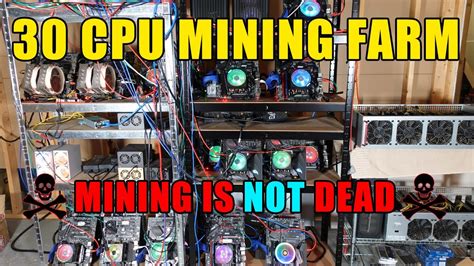
If you are interested in mining cryptocurrency but do not want to risk damaging your CPU, there are several alternatives to consider:
- GPU Mining: GPU mining uses the processing power of a computer's graphics card to mine cryptocurrency. It is generally more profitable than CPU mining and less stressful on the hardware.
- ASIC Mining: ASIC mining involves using specialized hardware designed specifically for mining cryptocurrency. ASIC miners are highly efficient and can generate significant profits, but they are also expensive.
- Cloud Mining: Cloud mining allows you to rent computing power from a mining provider and participate in mining without owning the hardware. This is a good option for those who do not want to invest in mining hardware or deal with the technical aspects of mining.

CPU mining can be a potentially profitable venture, but it comes with the risk of damaging the CPU if proper precautions are not taken. To minimize the risk of damage, it is crucial to ensure adequate cooling, avoid overclocking, and monitor CPU temperatures regularly. Additionally, consider alternatives to CPU mining, such as GPU mining, ASIC mining, or cloud mining, which may be more efficient and less harmful to your hardware.
FAQs
Q1: What is the main risk of CPU mining? A: The main risk of CPU mining is potential damage to the CPU due to excessive heat, stress, and power consumption.
Q2: How can I prevent CPU damage while mining? A: To prevent CPU damage, ensure adequate cooling, avoid overclocking, monitor CPU temperatures, and use a high-quality power supply.
Q3: Is CPU mining still profitable? A: CPU mining can still be profitable for some cryptocurrencies, but it is generally less lucrative compared to other mining methods such as GPU mining or ASIC mining.
Q4: What are some alternatives to CPU mining? A: Some alternatives to CPU mining include GPU mining, ASIC mining, and cloud mining.
Q5: Which alternative mining method is the most efficient? A: The most efficient alternative mining method depends on various factors such as the cryptocurrency being mined, the hardware available, and the miner's budget. ASIC mining is generally the most efficient, followed by GPU mining and cloud mining.
